



Charlie Stewart’s business didn’t start with much—just $10,000, a rented storage shed, one truck, one product, and a few friends who believed in him. Today, he and his business partner own Southwest Construction Services, a subcontracting business approaching $100M+ in revenue that has more than 800 employees, multiple service lines, and is considered one of the strongest, most recognized construction companies in the DFW Metroplex.
For construction executives looking to reach their next level of growth, Stewart’s story is more than inspiring—it’s full of lessons subcontractors can use today to achieve their growth goals in the future. He’s been to the brink “a thousand times,” and he’s watched dozens of great companies fail because they scaled too fast or without the right infrastructure in place.
Here are his top recommendations for subcontractors navigating the path to $100M+ in revenue:

Stewart considers all of these areas integral to Southwest’s success, but investing in people and processes are the foundation for growth.

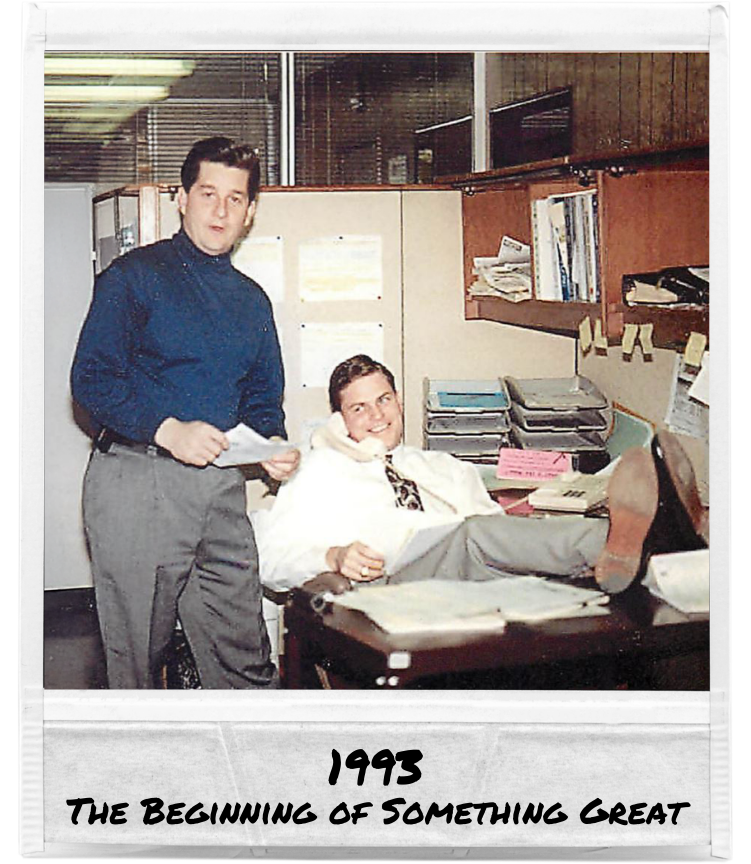
Southwest Construction Services (SCS) isn’t your average construction company. Established in 1993, they’ve become a leader in waterproofing, sawing, demolition, and specialty concrete services. With a combined 250+ years of senior staff experience, SCS offers unparalleled expertise delivered safely and on time for clients across the United States.

From the earliest stages of the business, Stewart knew the importance of hiring the right people on his team, and continued to invest in them over the years. The Southwest team approached hiring with the mindset, “We can’t afford to not have someone like that on our team.”
They applied that mentality to every area of the business, ensuring Southwest had the best accounting, sales, and operations people in place.
“When you have the attitude of being the best, you’ll always move up.”

Southwest’s early growth wasn’t driven by bidding strategy or a breakthrough product — it was built on Stewart’s commitment to understanding and improving every part of his business. In the early days he would start the day in slacks doing estimating, then change into jeans and go to the jobsite.
As the company grew he standardized equipment, trained crews, and documented processes. He tracked everything from linear feet installed per day to how long it took crews to leave the yard in the morning. He treated his people like assets — and then built systems around them.
He didn’t just invest in field operations: he built a financial operation, added project managers to support sales reps, created a full in-house training center, and flowcharted the entire business — from bid to final check. By understanding and improving every aspect of the business, Stewart created a blueprint to scale.

Stewart started with a small, talented but inexperienced team. He treated employees as investments and built repeatable training and procedures so the process could be multiplied as the company grew.
Everything in the business had a standard operating procedure — trucks, tools, uniforms, training, reporting, and even how equipment is stored and moved between divisions. Managers walk the yards weekly. Equipment is tracked, cleaned, and rotated. The team is trained at the field level so they understand how their product works with other products in the industry and impacts the building envelope. That consistency removes worry about whether discipline is in place: every team knows what is expected and it’s consistent across the company.
Stewart believes first impressions matter, which is why Southwest established uniforms. He also imposed strict discipline throughout the organization, including:
Southwest also established standards for how the sales team evaluates and wins work: they vet potential customers for payment practices, quality, and credibility before bidding. Sales cannot adjust margins below a set threshold without management approval, protecting company margins.
Standardization isn’t just a process — it’s a culture. When your team knows what excellence looks like, they rise to meet it. Stewart says Southwest runs like a factory: boring, stable, but wildly profitable.
Nothing destroys a growing business faster than poor cash flow management. Stewart learned this lesson many times and came close to failure on multiple occasions.
Stewart emphasizes the value of a skilled finance person who can run cash flow models tied to revenue and sales. He also stresses the need for sufficient capital to sustain operations:
Early in Southwest’s history, Stewart was reluctant to file liens because he worried it would affect his relationships with general contractors. As the business matured, he recognized that protecting their right to payment needed to be part of Southwest’s regular business practices. Stewart learned that relying on goodwill alone can leave you unpaid, so the company treats lien filing as a business policy rather than a personal slight. Now, Southwest enforces a policy of filing liens when necessary.
Over the years, Stewart has worked to create a delicate balance between protecting Southwest’s right to payment while preserving relationships.
In addition to a seasoned accounting lead, Stewart asks each crew for a daily P&L report and reviews those reports every day to spot issues and opportunities for improvement.
Southwest grew not by being the lowest bidder but by being a trusted partner to general contractors (GCs). Crews are trained to anticipate issues, review plans and specs, raise problems to the GC before work begins, and consult manufacturers when needed. That proactive approach makes them an asset to GCs, preventing problems before they arise.
As a result, customers view Southwest as a top performer: consistent crews, strong training, and robust billing and project management. That reputation opens doors price never will.
With suppliers, Stewart is equally intentional. He refuses to cut suppliers out even if direct purchasing might save money, because the broader ecosystem matters: GC, owner, supplier — you can’t get greedy.
Following these recommendations, Southwest’s operations run smoothly. Stewart’s advice: